
Busting The Butter Myth
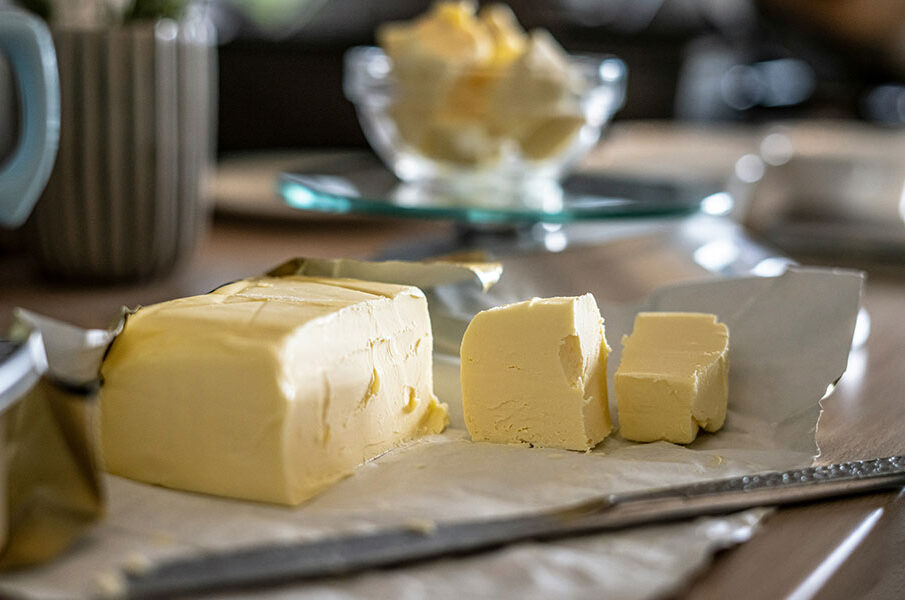
butter
The dairy product butter remained controversial and bore a bad rap in the food world for ages. That drove people to a lot of head-scratching. Health magazines claimed eating butter for its high dietary fat ran the risk of jacking up cholesterol levels, leading to clogging of the arteries.
Over the past two decades, people have been misled by flawed verdicts by scientific research and doctors that health-conscious persons should avoid certain foods, like butter, clarified butter (ghee), coffee, and eggs, among many others, as they contain high cholesterol.
The media hype blew it out of proportion. In later years, more futuristic research and rigorous probes into the matter turned the tables, and high-fat foods considered detrimental to health made a convivial comeback.
“Eat butter,” declared the Time Magazine cover in June 2014. Likewise, the New York Times quoted: “Butter is Back.” The news created an uproar worldwide.
There are no two ways: most adore butter for its rich flavor and creamy texture. For nearly all, a slice of bread on a breakfast table without a dab of butter is like a car without gas. And when it comes to baking, butter is at the core of making cakes, pastries, loaves, you name it.
Again, in roasting or air-frying delicacies like poultry, veggies, pasta dishes, and many more, butter is widely and liberally used. It also enhances the flavor of the food while sautéing, pan frying, grilling, searing, barbecuing, and more.
Busting the myths
So what’s the catch? To understand the controversy, let’s examine the healthy side of butter. Let’s take a look at the nutrition chart.
Based on one tablespoon:
| Nutrition Facts | |
| Serving Size | 1 Tablespoon |
| Amount per serving | Butter |
| Calories | 102 |
| Total Fat | 11.5gm |
| Saturated Fat | 7.29m |
| Trans Fat | 0.47gm |
| Polyunsaturated Fat | 0.43 gm |
| Monounsaturated Fat | 2.99gm |
| Carbohydrate | 0gm |
| Fiber | 0gm |
| Sugar | 0gm |
| Protein | 0mg |
| Reference Daily Intake (RDI) | |
| Vitamin A | 11% |
| Vitamin E | 2% |
| Vitamin B12 | 1% |
| Vitamin K | 1% |
Besides, butter is a source of calcium and Vitamin D. (Source: WebMD ).
Whoa! Butter’s concentration of saturated fat and calories appears high, but there is nothing to get alarmed about so soon. Let’s look at the break in the clouds and dig into its list of health benefits.
It aids in the strengthening of bones.
Butter contains crucial nutrients such as vitamin D and calcium, essential for bone growth, development, and strength. The calcium in butter also prevents osteoporosis, which occurs when bone mineral density and mass decrease.
It supports the eyes.
Butter is high in beta carotene — a beneficial compound that your body converts into vitamin A, helping to slow the rate of vision loss or age-related angina pectoris and macular degeneration.
It can help cut down on the chances of cancer.
Scientific studies have also shown that regular intake of beta-carotene-dense butter reduces lung and prostate cancer risks. It is an exceptional source of conjugated linoleic acid (CLA), a fat present in meat and dairy products.
There is more. Scientific lab reports have shown CLA, for its potential anti-cancer compounds, could help slow the growth of breast cancer and work against cancers of the colon, colorectal, stomach, and liver.
It helps maintain skin health.
Studies have revealed that eating butter for its vitamin E and A content keeps our skin healthier by fortifying it from UV sun rays, reducing inflammation, and speeding the healing of skin irritants (inflammation) and superficial wounds.

Butter
Also Read : The Top 10 Health Benefits Of Alkaline Foods
Controversy regarding CVD
Regarding cardiovascular health, butter, for its high saturated fat content, still seems to be hounded by anti-fat campaigners. “In 2013, an article by Joanna Blythman in The Guardian wrote: A major review of scientific studies on fat, published in the American Journal of Clinical Nutrition, concluded that contrary to what scientists led us to believe, “there is no convincing evidence that saturated fat causes heart disease.” In particular, high-carbohydrate diets cause an increased risk of developing CVD (cardiovascular disease).
In this context, a controversial British cardiologist, public health campaigner, and author, Aseem Malhotra, “challenged the orthodoxy that the consumption of foods containing saturated fat, such as butter and red meat, causes heart disease.” Relieved, the butter-loving Brits breathed a sigh of relief.
Food manufacturers and processors worldwide—everything from low-calorie yogurt and pizza to breakfast cereals and ready meals—seemed set upon an anti-sat-fat campaign to woo the general public away from whole, natural foods, such as butter, which is only minimally processed as against considered a healthy substitute, margarine, which is highly processed.
“This is about politics, not science,” responded Marion Nestle, professor of nutrition & food studies at New York University.
As you can see, there are a lot of butter myths out there. However, don’t be naïve; better take the long-standing misconception with a grain of salt; there’s less truth to them than they make tall claims.
The American Heart Association recommends that less than seven percent of our daily calories come from saturated fat. You can eat about a tablespoon of butter daily to meet this goal while maintaining a nutritious diet.
Moderation is the crux.
If you eat a moderate amount of butter, include a generous amount of fruits, vegetables, and beans in your meal plan to keep your heart healthy. Focus on eating more fruits, vegetables, beans, nuts, and fish. Albeit, only eating nutritious foods does not help. You have to stick to a daily regimen of exercise (jogging, walking, cycling, etc.) to strike a balance.
So, the bottom line is there is no need to avoid butter like the plague. Don’t go overboard or binge, either. Embrace moderation. Distinguished nutritionists, debunking the long-standing myth, argue it’s time to start thinking outside the box about eating butter without feeling guilty.
Disclaimer: The views expressed in the above text are solely research-based, not medical advice; the author solicits readers’ discretion and cross-references or consulting a healthcare provider for further verification.


Leave a reply
-
So, what are Tibetan Singing Bowls?
If you are a novice, at first glance, Tibetan singing bowls look ...


