
Dietary Fiber : Necessity For Healthy Lifestyle And Well Being
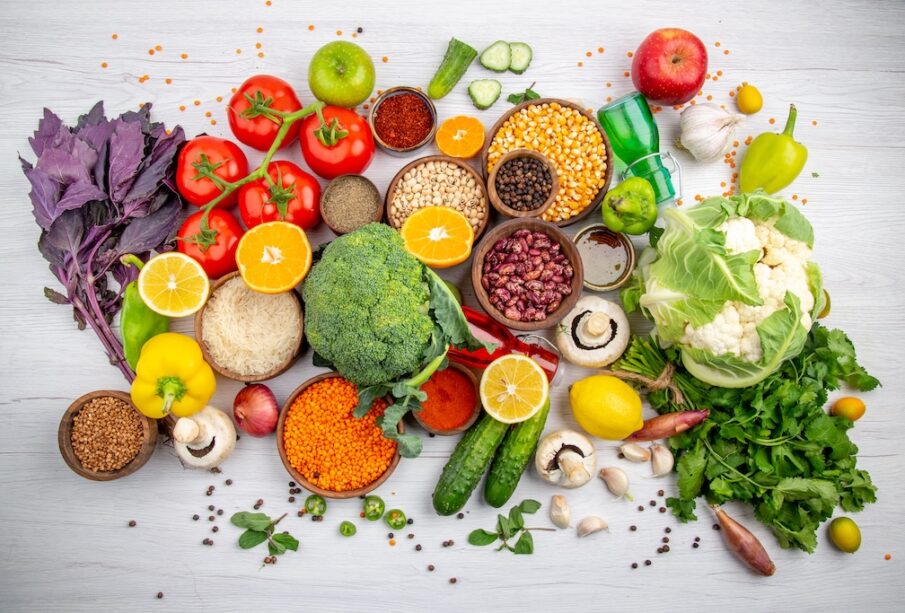
Top view of fresh foods and spices vegetables for cooking on white table
Medically reviewed by Prof. Dr. Sunil Shrestha MBBS, MS (Gen. Surgery), and fellowship upper; HPB Surgery (Royal Prince Alfred Hospital), Sydney, Australia.
Dieticians maintain that eating fiber-rich food offers a load of health benefits. You may have a clue that fiber found in foods is known for its faculty to prevent or relieve constipation.
That’s, however, only the tip of the iceberg. A fiber-dense diet furnishes several other dominant versatility to maintain overall good health, cutting the risk of chronic diseases such as diabetes, coronary ailments, and even some cancers. Before launching into the health benefits of fiber, some knowledge about dietary fiber might be helpful.
So, what’s dietary fiber? Also dubbed roughage, it includes foods from plant sources our body cannot absorb or digest. Surprisingly, it also falls under good carbohydrates ( polysaccharides).
Unlike food ingredients like fats, proteins, or carbohydrates that our metabolism comfortably exhausts, fiber remains undigested when consumed. Strangely, it travels relatively unbroken through the stomach, small intestine, and colon and exits the body.
For us, this may sound contradictory. Still, medical dieticians and nutritionists argue that our body needs it, and we can’t do without it for its outstanding role in helping maintain reasonable health and wellness, keeping us at bay from chronic diseases.
In recent decades, our diet has sharply switched from conventional fiber-based nutrient-rich to ultra-processed and junk food lacking dietary fiber, more so in Westernized societies, triggering high risks of chronic diseases.
Our bowels work as digestive or gastrointestinal apparatus, which take on the responsibility of helping the body absorb essential nutrients and fluids from the foods we eat and drink. After obtaining everything the body needs, the bowel expels the leftover waste. To that end, maintaining a smooth bowel function is pivotal in sustaining good health in general. Dietary fiber combined with ample fluid intake is consequently indispensable.
Fibers come in two forms: soluble and insoluble. Soluble fiber dissolves in water to turn into a gel-like substance. It can be found in oats, beans, legumes, apples, citrus fruits, carrots, barley, and green peas, to name a few.
Insoluble fiber promotes the mobility of ingested food through our digestive process and boosts stool bulk, helping those with constipation. Foods like whole wheat flour, nuts, beans, and vegetables, including green beans, kidney beans, potatoes, and cruciferous vegetables such as broccoli, cauliflower, Bok choy, and cabbage, are excellent sources of insoluble fiber. You may not know that roasted soybeans pack a very high fiber content.
Benefits of a high-fiber diet
A fiber-dense diet provides various other health benefits besides normalizing bowel movements and fine-tuning our metabolism. Let’s take a look at some helpful healthcare benefits of fiber.
·Beneficial to diabetes: A high-fiber diet improves glycemia and insulin sensitivity in non-diabetic and diabetic people. Since the body cannot absorb and break down fiber, it does not trigger blood-sugar spikes like other carbohydrates.
Harvard Medical School states, “People whose diets are high in fiber are less likely to have problems such as metabolic syndrome, which can be a precursor to diabetes.” Thus, fiber-rich meals help maintain, organize, and stabilize blood sugar to a healthy level.
- Helps promote cardiovascular disease: The soluble fiber we derive from food helps reduce LDL, maintaining an overall cholesterol level by binding with cholesterol particles in our digestive system and pushing them out of the body before they’re absorbed.
High fiber intake lowers blood pressure and serum lipid concentration to aid cholesterol levels. Besides enhancing blood lipid profile, scientific observational studies showed that fiber helps whittle coronary heart disease (CHD) risk by stabilizing blood pressure levels and improving insulin sensitivity and fibrinolytic activity.
Stave off hemorrhagic stroke: Science-backed research and cohort studies highlight that regular consumption of fiber-loaded meals is instrumental in reducing the risk of strokes. Replacing refined grains with fiber-rich whole grains in the diet can lessen the stroke threat by a whopping 36 percent.
- Colorectal cancer and fiber: Colorectal surgeons contend that a fiber-rich diet can help lower the risk of contracting colorectal cancer. Colorectal cancer relates to cancers of the colon and the rectum. While colon cancer initiates in the colon, rectal cancer matures in the rectum.
They justify that eating a regular high-fiber diet helps prevent colorectal cancer from evolving. According to the American Cancer Society, colorectal cancer stands as the third most common cancer doctors diagnose in adults in the United States.
What’s more, a copious intake of fiber diet can support and alleviate:
· Gastrointestinal disorders, including gastroesophageal reflux disease, duodenal ulcer, diverticulitis, and hemorrhoids.
· Clinical studies suggest fiber-packed meals provide a wide range of benefits in areas such as bowel function, gut health, and the immune system defending the body against chronic inflammation and infections.
· Normalizes bowel movements and health.
· Provides for a healthy weight.
Caveat: High-fiber foods are vital, but people should add more fiber to their regular diet regimen in moderation to avoid possible backlashes like intestinal gas, abdominal bloating, and cramping. That allows the natural bacteria in our digestive system to adjust to the change. Drinking plenty of water and fluids is also essential so that the fiber absorbs adequate moisture to keep gut health in good order.
In a nutshell, our diet must incorporate adequate fiber for our body to run efficiently and allow a wide berth to chronic diseases. In essence, fiber in our daily meals is crucial in sustaining our overall health and nourishment and curbing the risk of chronic diseases.
Although fiber supplements are readily available over the counter as an option, experts still advise sticking with foods that meet dietary fiber requirements. The American Heart Association Eating Plan, too, suggests eating a variety of food with fiber sources rather than supplements.
Only eating nutritious foods with high fiber content cannot, albeit, serve the purpose. Striking a balance would help by adhering to a routine workout regimen (jogging, walking, cardio, cycling, etc.).
References: hsph.harvard.edu; clevelandclinic.org; ncbi.nlm.nih.gov; mayoclinic.org; betterhealth.vic.gov.au; cdc.gov; ucsfhealth.org; npr.org, medilineplus.gov; hopkinsmedicine.org and others.
Disclaimer: The views expressed in the above text are solely research-based, not medical advice; the author solicits readers’ discretion and cross-references or consulting a healthcare provider for further verification.



Leave a reply
-
So, what are Tibetan Singing Bowls?
If you are a novice, at first glance, Tibetan singing bowls look ...


